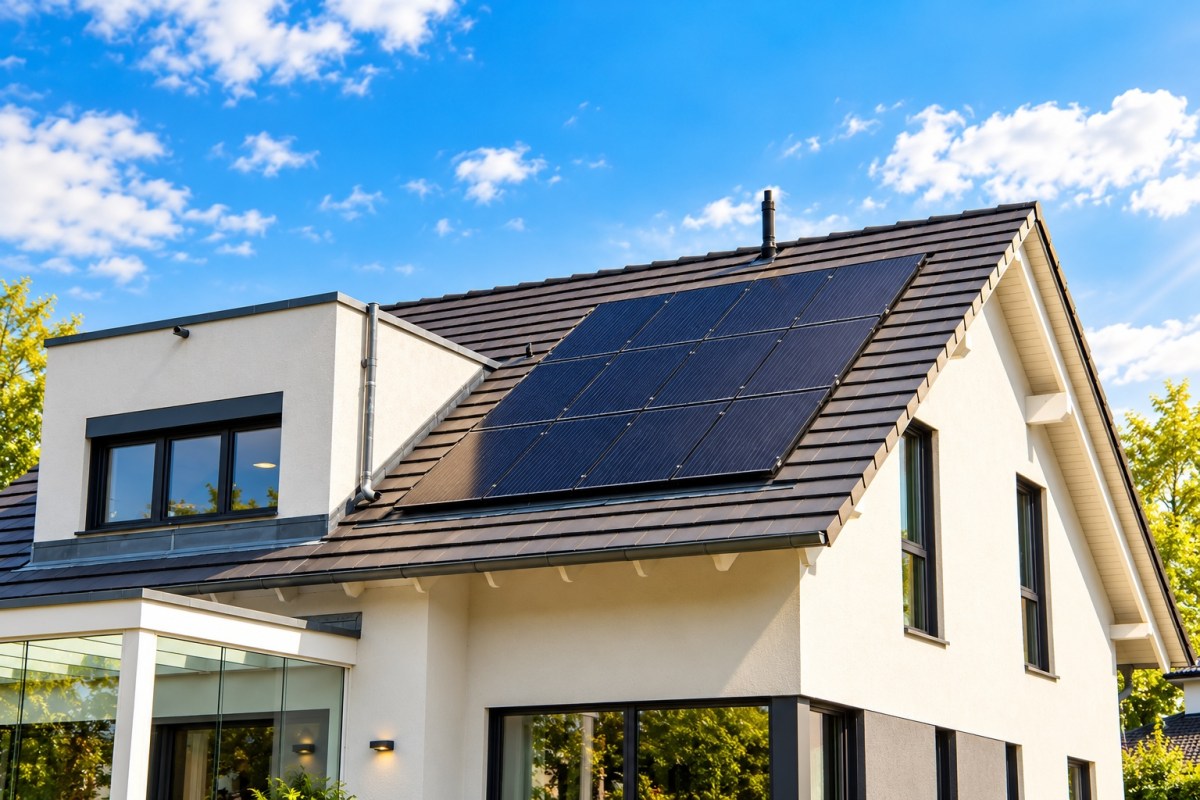
Rooftop solar has moved from a niche home upgrade to a mainstream way to slash energy bills by generating your own electricity.
Six million American households already have rooftop solar panels and a new installation is added in the U.S. nearly every minute. As electricity prices rise and the power grid becomes less reliable, solar panels have emerged as some of the most popular home energy technologies in the country, alongside home batteries.
But despite their potential to lower or even fully eliminate power bills, many people don't know where to start when considering an installation. EasyHome can help you cut through the noise to better understand the benefits of solar, when solar may (or may not) make sense for you, the hardware, and answer some frequently asked questions.
What are the primary benefits of rooftop solar?
The biggest benefit of adding solar panels is lower electricity bills. As energy prices fluctuate amid ongoing inflation, the ability to produce your own electricity is an appealing way to sidestep hefty power bills.
And the long-term financial benefits can be substantial. EnergySage estimates that the average U.S. homeowner can save roughly $60,500 over 25 years with solar panels, although actual savings vary considerably by location, electricity use, system size, and utility rates.
Solar can also protect you from future utility-rate increases. As electricity prices increase year after year, generating more of your own power means buying less from the utility when rates rise. Adding rooftop solar can also affect your home's resale value. A 2025 analysis of Zillow data found that homes with solar sold for roughly $25,000 more than homes without panels.
Beyond saving money, a rooftop array paired with a battery can provide outage protection. Depending on your system, you may be able to keep some or all of your appliances running when the grid goes down. This means the food and medication in the fridge won't be spoiled, the internet can stay up, and any crucial appliances can keep running.
When does rooftop solar not make sense?
Of course, solar isn't right for every home. Heavy shade from trees, neighboring buildings, or other obstructions can significantly reduce how much electricity your panels can produce. And while modern solar designs can minimize some shading losses, a heavily shaded roof may not be able to produce enough electricity to justify an installation.
Your roof's condition and age also matter. If the roof needs to be replaced soon, it may make more sense to do that replacement before installing panels.
A roof may also have too little usable area. Chimneys, vents, HVAC equipment, skylights and complicated roof designs can leave insufficient space for an array large enough to make a meaningful difference. Structural limitations can be another issue. A roof needs to be capable of supporting the added equipment and handling the loads associated with the installation.
Your roof's slope and orientation matter as well. In general, south-facing panels produce the most electricity in the Northern Hemisphere, while east- and west-facing roofs can still perform well. North-facing surfaces are usually the least favorable.
If the roof itself is a problem, community solar can be a good alternative. Instead of installing rooftop panels at home, a homeowner can subscribe to a shared solar project and receive credits associated with the electricity it generates.
There are also location-based and financial reasons to skip rooftop solar. If you expect to move soon, you may not be staying in the house long enough to realize the solar system's full financial benefits. Solar may save you less money in areas where electricity rates are unusually low, because there is less expensive grid electricity to offset. Likewise, a utility that has reduced the value it pays for exported solar electricity can make the financial calculation less attractive.
Finally, the upfront cost may simply be too high for some households. And although incentives can cut down these costs, not every state or local government offers financial incentives to go solar. In response, many Americans are opting for leased solar panels, both to avoid the upfront costs, but also to reduce the amount of maintenance they are responsible for; in 2025 nearly 40% of solar panels were installed under third-party ownership (leases and PPAs).
What makes up a typical rooftop solar system?
The idea behind rooftop solar is relatively simple. The solar panels capture sunlight, an inverter turns that energy into electricity your home can use, and any extra power can either be sent back to the grid or go into a home battery to be used later.
Solar panels contain photovoltaic cells, which turn sunlight into electricity. When sunlight hits these cells, they convert that light into direct current (DC) electricity which the wiring carries to the inverter. Because most homes and appliances run on alternating current (AC), an inverter is needed to convert the electricity from DC → AC.
Here are the main types of inverters that you are likely to encounter:
String inverters
String inverters connect multiple panels into a group called a string that feeds one central inverter. They are generally the lower-cost option and work particularly well when panels receive similar amounts of sunlight and face the same direction.
Microinverters
Microinverters attach to individual panels, so each panel converts DC electricity to AC and operates independently. This can be useful on roofs with shade, multiple roof angles or panels facing different directions. Microinverters also let you monitor each panel's performance, but are usually more expensive than string-inverter systems.
Hybrid inverters
Hybrid inverters manage both solar power and battery storage. They coordinate electricity from the panels, the home's energy use, the grid, and the battery. They're particularly useful when solar and energy storage are being designed as one system rather than as separate pieces of equipment.
After the inverter, AC electricity moves to the home's electrical panel, which distributes power to circuits and appliances throughout the house. If the solar system isn't producing enough electricity at a given moment, the home can draw the difference from the utility grid or from a home battery.
The utility meter measures the electricity moving between a home and the grid. With a grid-connected solar system, electricity can flow in either direction. When the panels produce more than the house is using, the excess can be exported to the grid or stored in a battery.
A monitoring system (or app) lets you track how much electricity your panels generate and, depending on the equipment, household consumption and battery activity. This can make it easier to spot unusual drops in production or understand when the home is using the most electricity.
Finally, a home battery stores electricity for later use. Instead of immediately sending all surplus power back to the grid, a homeowner can save some of that energy for nighttime use, expensive utility-rate periods, or an outage, helping to reduce energy costs and stay powered during blackouts.
How do batteries work with solar?
What are home batteries?
A home battery is an energy-storage system connected to a house's electrical equipment. It stores electricity from solar panels (or the grid) and lets you use that electricity later.
Under normal conditions, a solar-plus-battery system can use solar electricity immediately, charge the battery with excess production, and send surplus electricity to the grid. During an outage, a properly configured backup system disconnects from the grid and supplies electricity to the selected household circuits. The solar panels can then recharge the battery during daylight hours.
The most obvious benefit of a home battery is backup power. Depending on the battery size and system design, storage can keep a few critical appliances operating or provide power to much of the house.
Batteries can also help with time-of-use electricity rates. If electricity is inexpensive during certain hours of the day and expensive during others, the battery can store energy when rates are low and discharge it when rates are higher, significantly decreasing your power bill.
How are arbitrage and backup batteries different?
These batteries work differently. An arbitrage battery, sometimes called a consumption-only battery, shifts electricity use to take advantage of changing rates. It can charge from solar or the grid and supply power when electricity rates are higher, but it isn't always configured to provide power when the grid is down. A backup battery, on the other hand, is specifically designed for when the grid goes down, helping you keep the power during outages. Some battery systems can provide both functions.
An arbitrage battery can make sense where peak electricity prices are high. A backup battery makes sense when outage protection is a priority or when you want both energy shifting and resilience.
FAQs
If you think solar might be right for your home, but are unsure about the big picture, EasyHome has answered some of the most common questions about going solar.
How much do solar panels cost on average?
Your total cost depends on system size, equipment, roof conditions, labor, and location. But before incentives, it's common to pay between $2.6-$3.5 per watt of installed capacity. In the US, the average home rooftop solar array has a capacity of 7.15kW (or 7,150 watts). Using those two figures, before incentives, you could expect to pay between $18,590 - $25,025 for a 7.15kW system.
How many panels do you need?
To fully cover a home's electricity use, many homes need roughly 15-19 panels, but the number depends on your household's electricity use, the panels' wattage, roof space, and available sunlight. Standard residential solar panels typically have wattages of 350-450W.
How long do panels last?
Modern solar panels typically last 25 to 35 years. Many panels are warranted to retain at least 80% of their original output after 25 years.
How long does it take to break even on the panels?
The average U.S. solar payback period is around 10 years, but yours could be shorter or longer depending on your local electricity rates, incentives, system cost, financing, and solar production.
What are the different ways to finance a solar panel system?
Homeowners can buy panels outright, get a solar loan, lease the panels, or use a power purchase agreement (PPA). Each option comes with different ownership terms, monthly payments, maintenance responsibilities, and potential savings.
Can I get paid for excess production?
Often, yes. Under net metering, excess electricity is sent back to the grid, earning you credits on a utility bill. While most states have net metering, the policies differ state to state, and some programs pay solar owners more than others.
Can solar eliminate my electric bill?
Potentially. If your system is large enough, solar panels can reduce the energy portion of your bill to zero, but many homeowners still pay fixed charges or other fees to their utility.
Will panels work when the power goes out?
A grid-tied solar system shuts down during an outage. However, when paired with a properly configured battery backup system that can isolate the home from the grid, solar can continue providing electricity during an outage.
How much maintenance is required?
Solar panels generally require little routine maintenance. Keeping panels reasonably clear of heavy debris, dirt, and snow can help you avoid problems, so they may need to be cleaned once or twice a year. Often, though, rain can clean the panels sufficiently.
Is it hard to sell a house with solar panels on it?
It depends. Owned solar panels can be an attractive feature because homebuyers may value lower electricity costs. Zillow data shows that homes with rooftop solar actually sell for significantly more than those without (~$25,000 on average). On the other hand, a leased system may require the buyer to assume an agreement or the seller to pay it off before closing, potentially complicating a sale.