
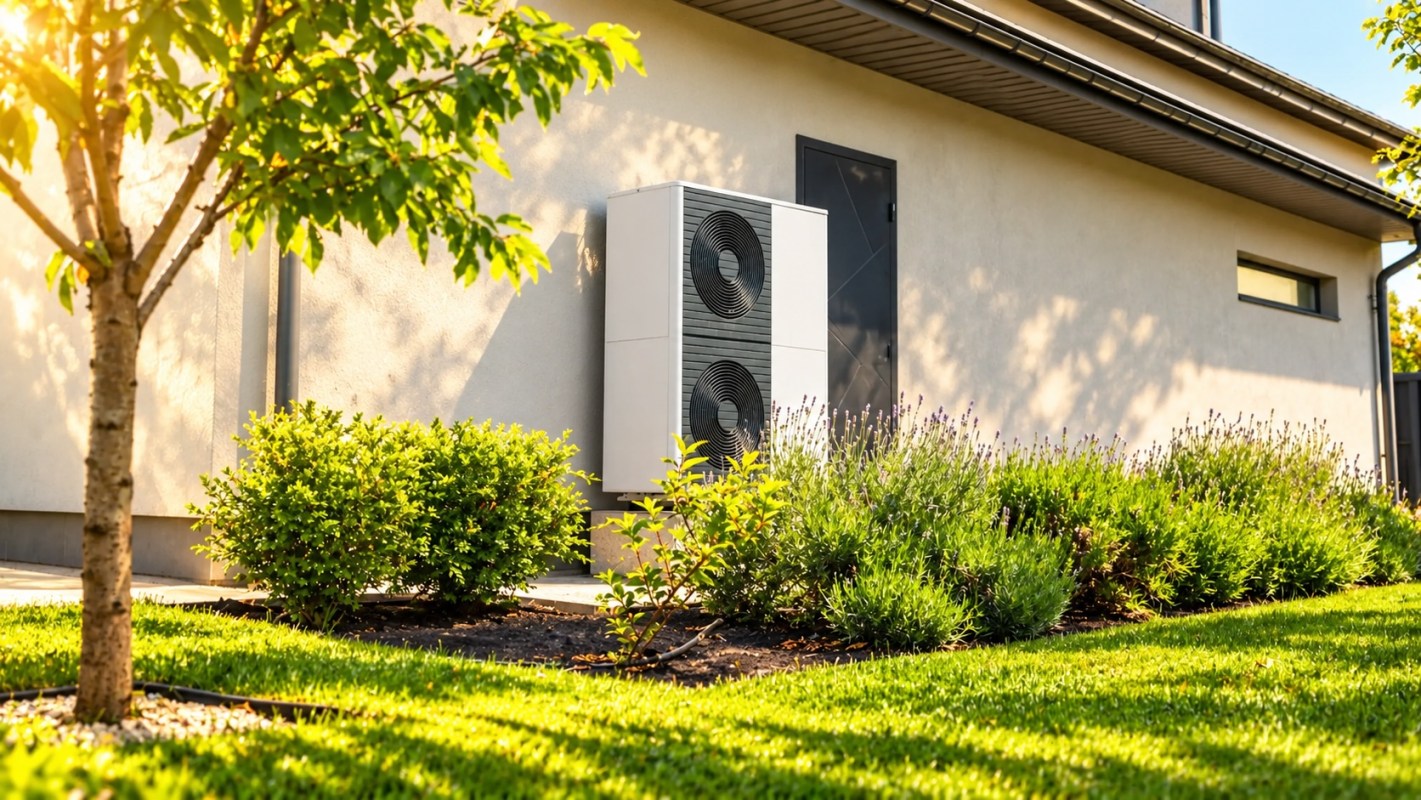
A home's HVAC system often accounts for half of a family's energy use, making heating and cooling a major household expense. Energy Star estimates that American households spend at least $900 every year on heating and cooling, and in many areas, the cost is much higher.
But as heating and cooling technology improves, these systems are becoming more efficient. Upgrading or replacing your HVAC system can be a great opportunity to lower energy bills and improve comfort.
Still, it's not always clear when you need a replacement or an additional unit, or which system is right for your home. EasyHome can help you understand your main options, explain how they work, compare their pros and cons, and answer common questions.
What are the common home heating and cooling options?
There are several types of home heating and cooling systems, but furnaces, central air conditioning, and heat pumps are among the most common.
Furnace
Furnaces run on natural gas, propane, oil, or electricity. In a gas, propane, or oil furnace, a burner combusts fuel inside the furnace. A heat exchanger transfers that heat to the home's air while keeping combustion gases separate. The blower then sends warm air through the ducts, while exhaust gases leave through a flue or vent.
An electric furnace works in much the same way. Instead of burning fuel, it uses electric heating elements to warm the air before the blower moves it through the ducts.
Central air conditioning or window ACs
Central air conditioning moves heat rather than creating cold. In a typical central AC system, warm air passes over an indoor coil, where refrigerant absorbs heat. A compressor raises the refrigerant's pressure and temperature, and the outdoor coil releases the heat outside. A blower then pushes the cooled air through the home's ducts.
An expansion valve lowers the refrigerant's pressure and temperature so it can absorb more heat and continue the cooling cycle.
In some areas of the country, window AC units are more common due to houses built before ducted systems became common. These homes are often a better fit for ductless mini-splits when a homeowner wants to upgrade from window ACs, especially as they provide heating abilities as well.
Ducted air-source heat pump
An air-source heat pump moves heat between your home and the outdoor air rather than generating heat directly. It works much like a central AC except it can also run in reverse, so to speak.
In heating mode, the outdoor unit pulls heat from the outside air. The refrigerant carries that heat through the system, while the compressor raises its pressure and temperature. An indoor heat exchanger then releases the heat into your home.
In cooling mode, the process reverses. The system pulls heat from inside your home and releases it outdoors. This means one system can provide both heating and cooling. Only refrigerant moves in and out between the outdoor unit and an air handler, so there is no direct intake of air into the home.
Mini-split heat pump
A mini-split is a ductless air-source heat pump with separate indoor and outdoor units. Instead of using central ducts, it delivers heated or cooled air directly to individual rooms or zones.
A typical system includes an outdoor unit with the compressor and outdoor heat exchanger, one or more indoor units with a heat exchanger and fan, and refrigerant lines that connect them. Like with ducted, it's only refrigerant that actually does the work here, meaning the air pushed out by any indoor unit is just air already from inside your home that is heated or cooled. In cooling mode, condensation gets pulled from the air and sent outside as well, meaning these function as dehumidifiers too.
Geothermal (aka ground) heat pump
A geothermal, or ground-source, heat pump uses the same basic process as an air-source heat pump. The difference is where it exchanges heat. Instead of exchanging heat with the outdoor air, it exchanges heat with the ground.
The system uses buried pipes called ground loops to transfer heat. Because ground temperatures stay more stable than outdoor temperatures, geothermal systems can operate very efficiently. However, installing the underground loops usually makes them much more expensive upfront.
What are the tradeoffs of home heating and cooling technologies?
Even when you know you need to replace your HVAC system, choosing the right option for your home and budget can be complicated. EasyHome helps you compare the main pros and cons of each system so you can make a more informed decision.
For the sake of simplicity, furnace and traditional air conditioning will be paired into one column. Similarly, because mini-splits use the same technology as air-source heat pumps, those two will be combined as well.
| Furnace + Air Conditioner | Air Heat Pump | Ground Heat Pump | |
|---|---|---|---|
| Functions | Heating & cooling separate | Heating & cooling in one | Heating & cooling in one |
| Heat source | Fuel or electricity | Outdoor air | The ground |
| Upfront cost | Low to moderate | Moderate to high | High |
| Operating cost | Varies by fuel type | Low to moderate | Very low |
| Efficiency | Moderate | High | Very high |
| Winter performance | Strong | Model-dependent | Strong |
| System care | Annual system and safety inspections | Annual system checks | Annual system checks |
| Lifespan | 10-15 years | 10-15 years | 20-25 years |
| Ductwork | Usually required | Usually required | Usually required |
| Noise level | Moderate | Low indoors, moderate outdoors | Low |
| Backup heat? | No | Location- and model-dependent | Usually not |
When does each system make more or less sense?
A furnace makes sense when…
• Your home already has working gas or propane connections, and fuel is relatively inexpensive in your area.
• Strong heating performance in very cold weather is your top priority.
• Switching to a heat pump would require major electrical or ductwork upgrades.
• You're comfortable keeping a separate AC system.
A furnace may not make sense when…
• You want to switch your home to electric heating.
• Electricity is relatively inexpensive, and a heat pump can work efficiently in your climate.
• Your existing AC also needs replacing.
• You want one system to handle both heating and cooling.
• Long-term energy efficiency is a major priority.
• You want to take advantage of available energy-efficiency incentives.
An air-source heat pump makes sense when…
• You want one system to provide both heating and cooling.
• Electricity prices are favorable compared with heating-fuel costs.
• Your home is well-insulated and has few air leaks.
• Your local climate supports efficient heat-pump operation.
• Your existing AC is nearing the end of its useful life.
• You want to switch your home to electric heating.
• Incentives significantly reduce installation costs.
An air-source heat pump may not make sense when…
• Electricity is unusually expensive compared with available heating fuels in your area.
• Your home has major insulation problems or air leaks.
• Installation would require expensive electrical upgrades.
• Your existing furnace or AC is relatively new and works well.
• Your home has unusually high heating needs that the system can't easily meet.
A geothermal heat pump makes sense when…
• You plan to stay in your home for many years.
• You want one system for both heating and cooling.
• You have enough land or access to a suitable site for ground loops.
• High efficiency and low operating costs are top priorities.
• You're replacing old HVAC equipment and can afford the higher upfront cost.
A geothermal heat pump may not make sense when…
• You have a limited budget for upfront installation costs.
• You may move within a few years.
• Your property has difficult conditions for installing ground loops.
• Your existing HVAC system works well.
• The expected energy savings don't justify the extra installation cost.
• Drilling or excavation would be unusually expensive or disruptive.
A mini-split heat pump makes sense when…
• Your home doesn't have existing ductwork, and you don't want to add it.
• You want heating and cooling for a garage, an addition, a converted space, or individual rooms.
• You want to control the temperature in each room separately.
• Some rooms are hard to keep comfortable with your current HVAC system.
A mini-split heat pump may not make sense when…
• You prefer a centralized system with hidden equipment.
• You need to heat or cool many rooms and would need several indoor units, making installation too complicated or expensive.
• Your home has unusually high heating needs that mini-splits can't meet.
Central AC makes sense when…
• Your main need is cooling, and you're happy with your home's heating system.
• Your home already has a working duct system.
• You prefer one central system instead of multiple indoor units.
• You want a widely available technology with plenty of service providers.
Central AC may not make sense when…
• Your home doesn't have existing ductwork.
• You want one system to provide both heating and cooling.
• You only need to cool a small part of your home.
• You want to control the temperature in each room separately.
• Your existing ducts are poorly designed, leaky, or difficult to access.
FAQs
General HVAC questions
How do I know when my HVAC system needs replacing?
Frequent repairs, declining performance, rising energy use, or major component failures may mean it's time to replace your system.
How many estimates should I get before upgrading my home's heating and cooling?
Get at least three detailed estimates. Compare the full installation costs and proposed systems, not just equipment prices.
How large an HVAC system does my home need?
Your home's square footage alone isn't enough to determine the right HVAC size. A contractor should calculate your home's heating and cooling needs using a method like a Manual J.
Should I replace my HVAC system before it breaks?
Not necessarily. But if your equipment is nearing the end of its expected life, becoming unreliable, or needing expensive repairs, replacing it early can give you more peace of mind and time to compare options.
What maintenance does an HVAC system need?
Most systems need regular filter changes and annual inspections. Outdoor and indoor coils, condensate drains, electrical components, and refrigerant systems may also need attention.
Do heat pumps also provide AC?
Yes! Heat pumps can provide both heating and cooling.
Furnace FAQs
How efficient are modern gas furnaces?
Modern high-efficiency gas furnaces can turn a high percentage of the fuel they use into heat. Efficiency depends on the model's AFUE rating, but modern furnaces commonly range from 80% to 98% or more.
Is a gas furnace better than an electric one?
Neither is always better. It largely depends on local gas and electricity prices. Gas furnaces can provide powerful heat, while electric resistance furnaces are simpler and don't produce combustion emissions inside the home.
Can I replace my furnace with a heat pump, or vice versa?
Often, yes. A ducted heat pump can use your existing ductwork if the ducts and electrical system are suitable. You can also pair a furnace with a heat pump in a dual-fuel system.
Does a furnace need a separate air conditioner?
Yes, if you want your home to have central AC.
Central AC FAQs
Why is my AC running but not cooling well?
Possible causes include restricted airflow, a dirty filter or coil, refrigerant problems, incorrect equipment sizing, or other mechanical issues.
How often should I service my AC?
Annual professional servicing is recommended, especially before the cooling season.
What makes an AC energy-efficient?
Efficiency depends on the equipment's SEER2 rating, system design, sizing, ductwork, controls, and installation quality.
Heat pump FAQs
Do heat pumps work in winter?
Yes. Heat pumps can operate in cold weather, although air-source systems generally become less efficient as temperatures fall. Cold-climate heat pumps are designed to work in colder regions.
How many rooms can one mini-split serve?
A single-zone system serves one indoor unit. Multi-zone systems can connect several indoor units to one outdoor unit. The right number depends on your home's layout and heating and cooling needs.
Do I need a large yard for a geothermal heat pump?
Not necessarily. Ground loops can be installed horizontally or vertically, so the space needed varies. Smaller or difficult sites may require more expensive drilling or a different system design.
Will a heat pump require an electrical upgrade?
It depends on your home's electrical capacity and the equipment you choose. A ducted heat pump can often use existing ductwork, but you should address leaky or poorly insulated ducts because they reduce system performance.
Does a heat pump need backup heat?
Not always. Many heat pumps can meet a home's heating needs without backup heat. In colder climates, however, you may want supplemental heating.
Are rebates or tax incentives available for heat pumps?
Yes, in many cases. State, local, and utility rebates are often available, particularly for highly efficient units. Check out Energy Star's rebate finder for more information.