
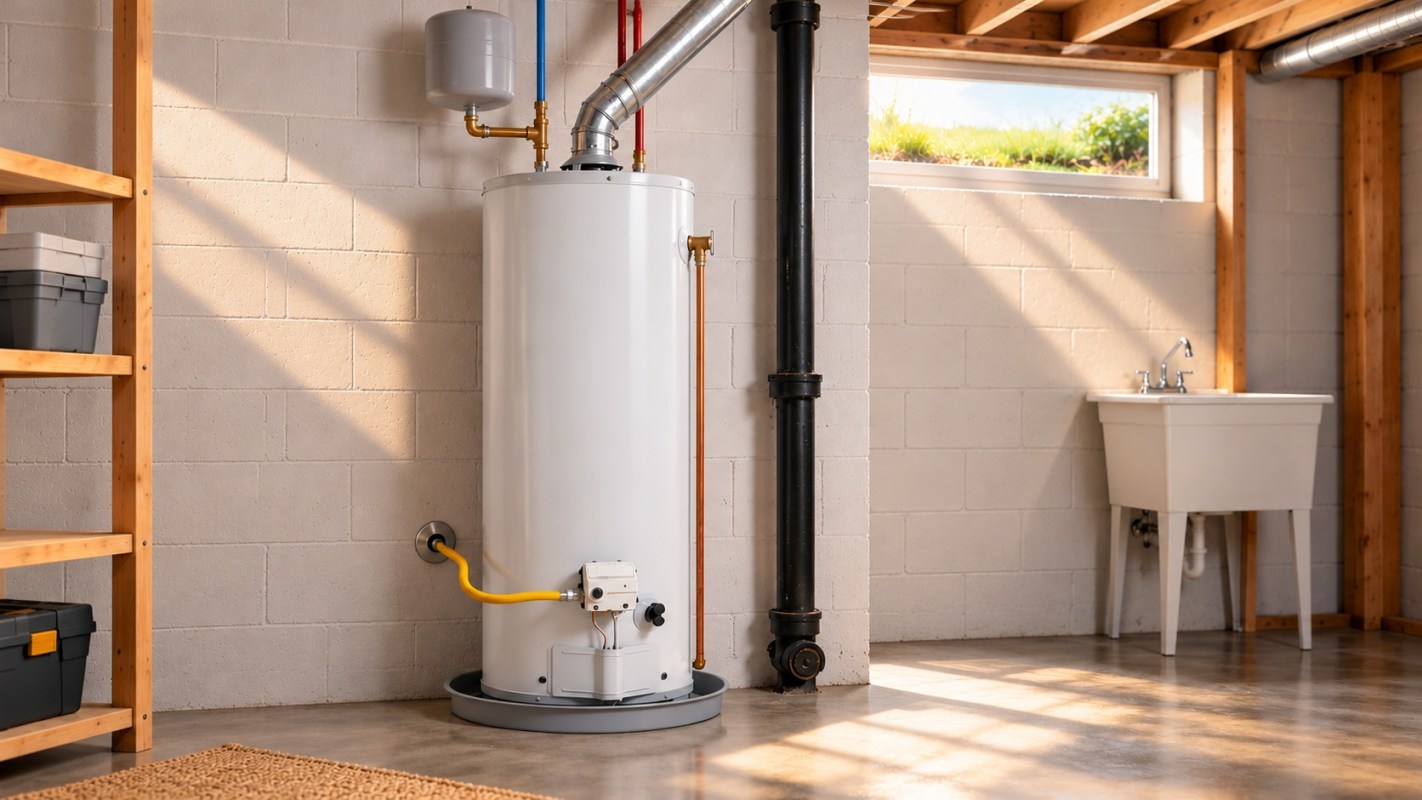
Replacing a water heater isn't the most exciting home upgrade, but when done right, it can lower utility bills, provide more reliable hot water, and prevent headaches.
EasyHome can help you choose the right type of water heater for your home and budget by breaking down the most common upgrade options, discussing the benefits and drawbacks of each, and answering some frequently asked questions about water heaters.
What are the main types of water heaters?
These are four of the most common types of water heaters:
Conventional gas storage tanks
A conventional gas storage tank heats and stores water, usually between 30 to 80 gallons. Its burner turns on periodically to maintain the water temperature, so hot water is available when you open a tap. These tanks can be a practical choice for households that already have gas service and need a lot of hot water.
Electric resistance storage tanks
An electric resistance water heater uses heating elements inside the tank to heat the water. It works like a conventional gas unit, but without a gas burner. These units are usually relatively easy to install when a home already has the right electrical service.
Tankless water heaters
Tankless units can run on gas or electricity. Instead of keeping a tank of water hot, the unit heats water as it flows through the system. Because there's no large tank that needs to stay hot between uses, tankless systems avoid the standby heat losses associated with conventional storage heaters.
Heat pump water heaters (HPWHs)
Unlike other types of water heaters, heat pump water heaters use electricity to move heat from the surrounding air into the water instead of generating heat directly. This makes them highly efficient. Most units have smart features that let them heat water when electricity is cheaper or draw power from solar panels. They usually include electric resistance heating that kicks in during periods of high demand.
Why upgrade your water heater?
The most obvious reason to upgrade to a new water heater is lower energy bills. Your potential savings will depend on several factors, like the new water heater's efficiency, your old unit's efficiency, utility rates, and how much hot water your household uses.
Because water heating accounts for about 15–20% of a household's energy use, upgrading can save you a significant amount of money.
Utility programs and state or local incentives may also lower the cost of a replacement. Offers vary by location, equipment, and eligibility, so it's important to check out your incentive options before buying. Energy Star has a useful rebate finder to help you snag available incentives no matter where you live.
Beyond energy savings, a properly sized new water heater can also provide a more reliable supply of hot water. That way, one longer shower won't disrupt the rest of your household's morning routine. If you're ready to explore your options, EasyHome can help you sort through the tradeoffs of each type of water heater.
What are the tradeoffs of each type of water heater?
| Gas | Reg. Electric | Tankless | HPWH | |
|---|---|---|---|---|
| Upfront cost | Low to moderate | Low | Moderate to high | Moderate to high |
| Monthly bill | Moderate | High | Low to moderate | Low |
| Efficiency | Moderate | Low to moderate | High | Very high |
| Hot water avail. | High | Moderate | High | High |
| Recovery rate | High | Low | Very high | Moderate to high |
| Complex install? | Low to moderate | Low | Moderate to high | Moderate |
| Space needed | Moderate | Moderate | Low | High |
| Noise | Low | Very low | Low to moderate | Moderate |
| Maint. needed | Moderate | Low | Moderate to high | Low to moderate |
| Lifespan | 10-15 years | 10-15 years | 15-20+ years | 10-15 years |
When does each make more or less sense?
A conventional gas tank makes sense when:
• Gas service is already available and inexpensive in your area.
• Keeping upfront costs low is your priority.
• You need a lot of hot water.
A conventional gas tank may not make sense when:
• Maximum energy efficiency is your priority.
• You'd need to add gas service or venting.
• You're concerned about long-term operating costs.
• You're concerned about combustion gases, carbon monoxide, or gas leaks.
An electric resistance tank makes sense when:
• Gas isn't available.
• You want a simple installation.
• Keeping upfront costs low is your priority.
• Your household doesn't use a lot of hot water.
An electric resistance tank may not make sense when:
• Electricity is expensive in your area.
• Your household uses a lot of hot water.
• Power outages are frequent in your area.
• You could install a heat pump water heater at a reasonable cost.
A tankless unit makes sense when:
• Space is tight.
• You need a steady supply of hot water.
• You want to reduce standby energy losses.
• Your home's infrastructure can support it.
• You want a water heater with a longer than average service life.
A tankless unit may not make sense when:
• Your household doesn't use much hot water.
• Multiple fixtures often need hot water at the same time.
• Upgrading gas lines, venting, or electrical service would be expensive.
A HPWH makes sense when:
• Energy efficiency is your top priority.
• Available incentives make the upgrade more affordable.
• You want to use less energy without giving up a storage tank.
• Your home has enough space and suitable climate conditions.
A HPWH may not make sense when:
• There's not enough space for installation.
• You need a low-cost replacement right away.
• The surrounding environment isn't suitable for the unit.
• Installation costs would make the upgrade too expensive.
FAQs
Purchasing & economics
How much does a new water heater cost?
In general, expect to pay between $1,000 and $4,000. Costs vary significantly by type, capacity, brand, and installation requirements, but conventional storage models generally cost less than more efficient tankless and HPWH systems. Installation costs can add substantially to your total, especially if your home's infrastructure needs changes to accommodate a new appliance.
Which water heater is cheapest to operate?
HPWHs generally have the lowest operating costs of the four options, especially compared with conventional models.
How many quotes should I get?
Get at least three written estimates to compare equipment, installation requirements, warranties, and total project costs.
Are there rebates or tax incentives for energy-efficient water heaters?
Yes! State, local, and utility rebates are often available, especially for HPWHs because they're so efficient.
Performance
How much hot water do I actually need?
Consider how many people live in your home, when they use hot water, and which fixtures might run at the same time. The first hour rating (FHR) helps you compare storage tank systems, while gallons per minute (GPM) measures the capacity of tankless units.
Will a tankless water heater run out of hot water?
It won't run out in the same way a storage tank can, but it does have a maximum flow rate. If too many fixtures need hot water at once, you could exceed the unit's capacity.
Does the climate I live in matter for a HPWH?
Yes. HPWHs draw heat from the surrounding air, so your local temperature and available airflow can affect a unit's efficiency and performance.
Installation
Can I replace my gas water heater with an electric one? Or vice versa?
Often, yes. However, switching fuel types may require new electrical circuits, gas piping, venting, or other changes.
Can I install a HPWH where my old tank was?
Possibly. The location must have enough airflow and clearance and meet the unit's electrical and drainage requirements.
Does a tankless water heater require special plumbing or electrical work?
It can. Depending on the model, installation may require upgraded electrical service, larger gas lines, new venting, or plumbing changes.
Does my home have enough electrical capacity for an electric water heater?
An electrician can check whether your panel, circuit, breaker, and wiring can handle the new water heater.
How long does water-heater installation take?
A straightforward replacement can often be completed in one day. Projects that need new electrical circuits, gas lines, venting, drainage, or other infrastructure can take longer.
Maintenance & lifespan
How often does a water heater need maintenance?
Storage tanks can benefit from regular inspections and occasional flushing, while tankless systems may need more frequent descaling, especially in areas with hard water.
What is an anode rod, and do I need to replace it?
An anode rod is a replaceable part in many storage water heaters that helps protect the tank from corrosion. It eventually wears out and may need replacing when it's depleted, so it's smart to check it every two or three years.
How do I know when my water heater needs to be replaced?
Leaks, corrosion, insufficient hot water, repeated repairs, unusual noises, and rising operating costs can all be signs that it's time for a replacement. A leaking storage tank generally needs to be replaced rather than repaired.